

Water Stewardship
Dhariwal Infrastructure Limited (DIL) is committed to responsible and sustainable water management by adopting efficient technologies, continuously improving operational processes, promoting water recycling and reuse, and implementing best practices in water conservation. Water stewardship is an integral part of DIL's sustainability approach, enabling the Company to conserve natural resources, enhance operational efficiency, and minimize its environmental footprint while ensuring reliable and sustainable power generation.
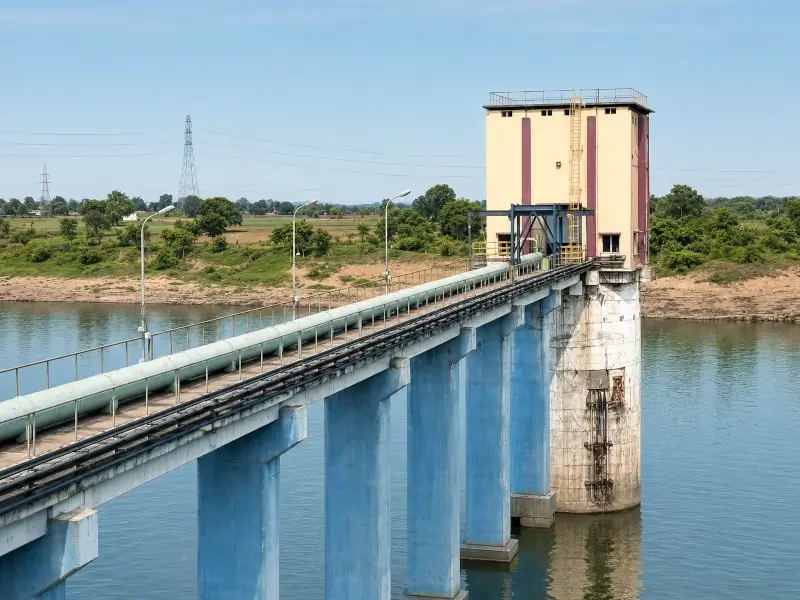
Water Conservation Initiatives
Rainwater Harvesting
DIL has implemented rainwater harvesting systems to capture and utilize rainwater, supporting groundwater recharge and supplementing the plant's water requirements.
Water Storage and Management
Well-planned water storage facilities are maintained to ensure reliable water availability while promoting efficient utilization and conservation of water resources.
Effluent Treatment and Recycling
Water generated from plant operations is treated through advanced effluent treatment systems. The treated water is recycled and reused wherever technically feasible, reducing the demand for freshwater and supporting sustainable operations.
Cooling Water Optimization
Cooling water systems are continuously monitored and optimized to improve efficiency, minimize water losses, and maximize water reuse across the plant.

Water Recovery and Reuse
Water recovered from various operational processes is treated and reused in suitable applications, contributing to reduced freshwater consumption and improved resource efficiency.
Preventive Maintenance of Water Systems
Regular inspection and preventive maintenance of pipelines, pumps, valves, cooling systems, and water treatment facilities help prevent leakages, enhance system reliability, and ensure efficient water distribution.
Efficient Water Management Practices
DIL continuously monitors water consumption, optimizes plant processes, and adopts industry best practices to improve overall water-use efficiency and strengthen sustainable water management.
Our Commitment
At DIL, responsible water stewardship is a key pillar of our sustainability strategy. We remain committed to conserving water resources through continuous improvement, adoption of innovative technologies, efficient water management practices, and enhanced recycling and reuse initiatives. Our focus is to achieve operational excellence while safeguarding natural resources for future generations.